Starting with Capital gains tax optimization strategies, this introductory paragraph aims to provide an engaging overview of how individuals and businesses can strategically minimize their tax liabilities and maximize benefits through effective planning and preparation.
Exploring the key concepts and strategies involved in optimizing capital gains tax, this discussion delves into practical examples and insights for better financial management.
Capital Gains Tax Optimization Strategies

When it comes to capital gains tax, it is essential to understand the concept and importance of optimizing it to maximize returns on investments. By utilizing various strategies, individuals can minimize the amount of tax they owe on their capital gains, ultimately increasing their after-tax profits.
Common Strategies for Optimizing Capital Gains Tax
There are several common strategies that individuals can employ to optimize their capital gains tax:
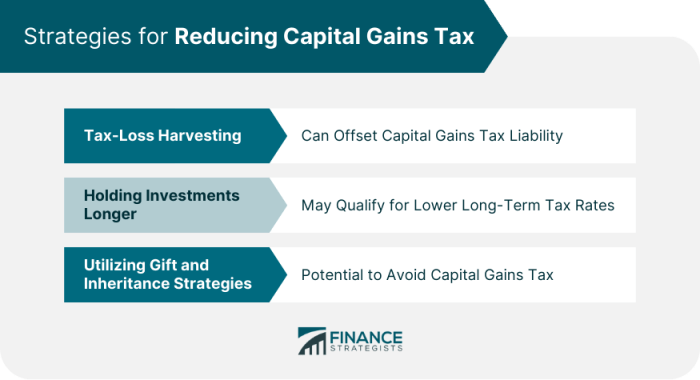
- 1. Long-Term Investing: Holding onto investments for over a year can qualify for lower long-term capital gains tax rates, which are typically more favorable than short-term rates.
- 2. Tax-Loss Harvesting: Selling investments at a loss to offset capital gains and reduce taxable income.
- 3. Utilizing Retirement Accounts: Investing in tax-advantaged accounts like IRAs and 401(k)s can defer or eliminate capital gains tax.
- 4. Charitable Giving: Donating appreciated assets to charity can help avoid capital gains tax while also providing a tax deduction.
Successful Examples of Capital Gains Tax Optimization Strategies
One successful example of a capital gains tax optimization strategy is the use of a 1031 exchange in real estate investments. By exchanging one investment property for another of equal or greater value, investors can defer paying capital gains tax on the sale.
Tax Planning

Tax planning is the process of analyzing a financial situation or plan from a tax perspective to ensure tax efficiency. It involves making the best use of available deductions, credits, and exemptions to minimize tax liabilities and maximize after-tax income.
Tax Planning Strategies for Capital Gains Tax
- Timing Capital Gains: By strategically timing the sale of assets, individuals and businesses can control the realization of capital gains to minimize tax liabilities. For example, deferring the sale of appreciated assets until they qualify for long-term capital gains tax rates can result in lower taxes.
- Offsetting Gains with Losses: Taxpayers can offset capital gains with capital losses to reduce their overall tax burden. This strategy involves selling investments that have decreased in value to offset gains from investments that have appreciated.
- Utilizing Tax-Advantaged Accounts: Investing in tax-advantaged accounts such as Individual Retirement Accounts (IRAs) or 401(k) plans can help individuals defer or avoid capital gains taxes altogether. Contributions to these accounts are often tax-deductible, and gains grow tax-deferred until withdrawal.
Benefits of Tax Planning for Capital Gains Tax
Tax planning can help individuals and businesses reduce their tax liabilities by legally optimizing their financial decisions. By taking advantage of tax deductions, credits, and exemptions, taxpayers can keep more of their income and assets. This not only leads to immediate tax savings but also allows for long-term wealth accumulation.
Short-term vs. Long-term Tax Planning Approaches
Short-term tax planning focuses on immediate tax savings through strategies like timing capital gains and losses, while long-term tax planning looks at overall financial goals and structures for sustained tax efficiency. Short-term strategies may involve quick adjustments to reduce taxes for the current year, whereas long-term strategies aim to create a tax-efficient financial plan for the future.
Tax Preparation
When it comes to capital gains tax, proper tax preparation is essential to ensure compliance with regulations and optimize tax liabilities. This process involves gathering and organizing relevant documents, calculating gains and losses, and accurately reporting them on your tax return.
Key Documents for Tax Preparation
- Brokerage statements: These documents show the purchase and sale of investments, including stocks, bonds, and mutual funds.
- Form 1099-B: This form provides information on the proceeds from the sale of investments.
- Purchase and sale confirmations: These documents detail the dates and prices of investment transactions.
- Records of reinvested dividends and capital gains distributions: These are important for calculating the cost basis of investments.
Role of Record-Keeping
Accurate record-keeping is crucial for effective tax preparation related to capital gains. Maintaining detailed records of investment transactions, including purchase dates, sale prices, and any reinvested dividends, helps in calculating the cost basis accurately.
Tips for Efficient Tax Preparation
- Stay organized: Keep all relevant documents in one place to streamline the tax preparation process.
- Use tax preparation software: Consider using tax software to help with calculations and ensure accuracy in reporting capital gains.
- Consult a tax professional: If you’re unsure about how to report capital gains or need assistance with tax preparation, seek advice from a tax professional.
Tax Optimization
Tax optimization is the strategic planning and utilization of various legal methods to minimize tax liability while maximizing financial benefits. When it comes to capital gains tax, tax optimization involves implementing strategies to reduce the taxes owed on the profits made from the sale of assets such as stocks, real estate, or other investments.
Difference between Tax Optimization and Tax Evasion
Tax optimization is a legal and ethical practice that focuses on utilizing tax laws and regulations to one’s advantage within the boundaries of the law. On the other hand, tax evasion involves illegal activities such as underreporting income, inflating deductions, or hiding assets to avoid paying taxes owed. It is important to note that tax evasion is punishable by law, while tax optimization is a legitimate way to minimize tax liability.
Legal Tax Optimization Strategies for Capital Gains Tax
- Utilizing tax-deferred accounts such as IRAs or 401(k)s to invest in assets that generate capital gains.
- Offsetting capital gains with capital losses to reduce the overall tax burden.
- Taking advantage of the long-term capital gains tax rate, which is typically lower than the short-term rate.
- Donating appreciated assets to charity to avoid paying capital gains tax on the appreciation.
Contribution of Tax Optimization to Financial Planning and Wealth Management
Tax optimization plays a crucial role in overall financial planning and wealth management by preserving more of the wealth you have accumulated. By minimizing tax liability on capital gains, individuals can reinvest the saved funds, diversify their portfolio, or allocate resources to other financial goals such as retirement savings or education funds. It helps in maximizing after-tax returns and achieving long-term financial objectives.
Tax Returns
When it comes to filing tax returns, especially with capital gains tax implications, it is essential to understand the process thoroughly to ensure compliance and optimize tax benefits.
Filing Process
- Ensure you have accurate records of all capital gains transactions throughout the year.
- Report capital gains on Schedule D of your tax return, including details of each transaction.
- Calculate your net capital gains or losses after considering deductions and exemptions.
- Submit your tax return by the deadline, typically April 15th, unless an extension is filed.
Important Deadlines and Requirements
- Reporting capital gains accurately and on time is crucial to avoid penalties and audits.
- Ensure you have all necessary documentation, such as 1099 forms from brokerage accounts.
- Keep track of any changes in tax laws that may affect capital gains reporting.
Consequences of Incorrect Reporting
- Incorrectly reporting capital gains can lead to penalties, fines, and potential legal issues.
- Audit risk increases if discrepancies are found between reported and actual capital gains.
- Seek professional help if you are unsure about reporting requirements to avoid costly mistakes.
Maximizing Tax Benefits
- Consider tax-loss harvesting to offset capital gains with capital losses.
- Utilize tax-advantaged accounts like IRAs and 401(k)s to defer or reduce capital gains taxes.
- Consult with a tax advisor to explore other strategies for minimizing tax liability on capital gains.
In conclusion, the importance of implementing sound tax optimization strategies for capital gains tax cannot be overstated. By understanding the nuances of tax planning, preparation, and optimization, individuals and businesses can navigate the complexities of tax laws while maximizing their financial outcomes.
FAQ Overview
How can I reduce my capital gains tax legally?
By utilizing tax planning strategies and optimizing your financial decisions, you can minimize your capital gains tax burden within the legal framework.
What documents are essential for capital gains tax preparation?
Key documents such as investment statements, purchase and sale records, and any relevant receipts are crucial for accurate capital gains tax preparation.
Is tax optimization the same as tax evasion?
No, tax optimization focuses on utilizing legal strategies to reduce tax liabilities, whereas tax evasion involves illegal methods to avoid paying taxes.
How does tax optimization contribute to overall financial planning?
By optimizing taxes, individuals and businesses can enhance their financial planning by maximizing savings and investments, leading to better wealth management.


